
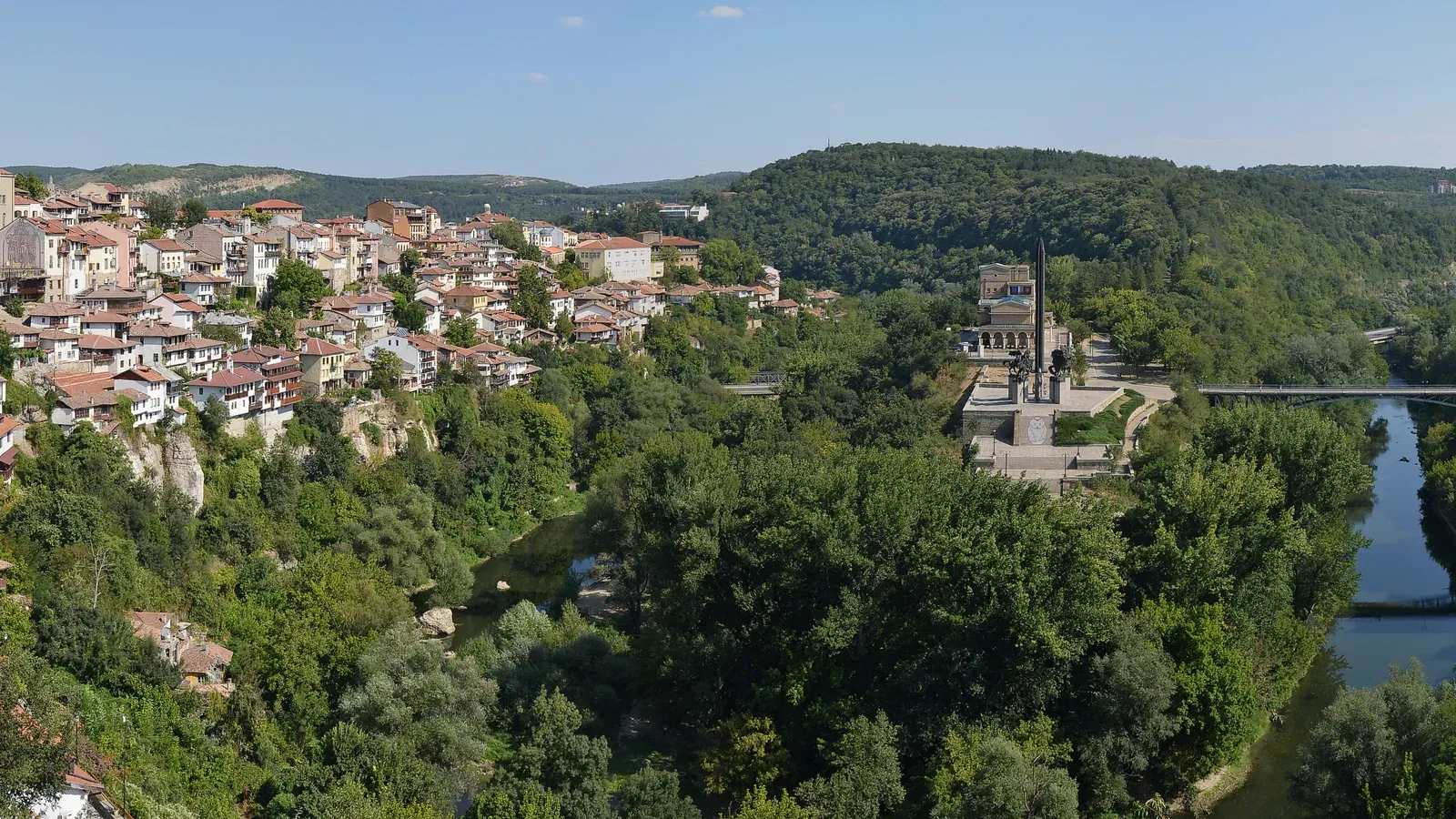
Bulgaria's taxes at a glance
| Tax on $50,000 of revenue | 25% to 35% |
|---|---|
| Tax on $100,000 of revenue | 15% to 25% |
| Effective rate at $100,000On profit, after costs of 15% | 17.6% Source: nra.bg, checked September 29, 2026. Computed: revenue EUR 87,889, profit EUR 74,706, income after the 25% deduction EUR 65,917, social security EUR 7,306 (capped), tax base EUR 58,610, income tax EUR 5,861, total EUR 13,167 = 17.6% of profit |
| Tax on $250,000 of revenue | 10% to 15% |
| Tax system | Worldwide |
| Foreign income, new residents | Taxed Source: nra.bg, checked September 29, 2026 |
| Social contributions, self-employed | 27.8% Source: nra.bg, checked September 29, 2026. Self-insured people born after 1959: 14.8% pensions, 5% universal pension fund, 8% health (general sickness and maternity 3.5% is optional). Monthly insurable income between a minimum of EUR 550.66 (to July 31, 2026) or EUR 620.20 (from August 1, 2026) and a maximum of EUR 2,111.64 or EUR 2,300, set by the 2026 State Social Security Budget Act (State Gazette 68 of July 28, 2026) |
Structure used: Self-employed under a free profession (not a registered sole trader), 25% statutory expense deduction, 10% flat income tax, and self-insured social security of 27.8% on insurable income up to the 2026 maximum. Bands are the effective tax on profit for a remote worker using this structure, with clients abroad and costs of 15% of revenue.
Bulgaria tax residency: 183 days or your center of life
Under the residence rules of the Personal Income Tax Act, you are a Bulgarian tax resident if any 1 of these applies, whatever your citizenship:
- More than 183 days in Bulgaria during the year. The day you arrive and the day you leave each count as a day in the country. Time spent only on study or medical treatment does not count.
- Your center of vital interests is in Bulgaria. The National Revenue Agency weighs your family, your property, the place you work or run a business from, and the place you manage your assets from.
- A permanent address in Bulgaria. On its own this is not enough: a person with a Bulgarian permanent address whose center of vital interests is elsewhere is treated as non-resident.
The tax authority judges residence case by case, weighing all of your circumstances together. That means there is no safe number of days for someone whose partner, home and business have all moved to Sofia. If 2 countries both treat you as resident, the tie-breaker in the tax treaty between them decides which one taxes your worldwide income.
Staying under 183 days to stay out of Bulgarian tax
Works
You spend 150 days in Plovdiv on a short-term rental, and your home, partner and business stay in your home country, where you file as a resident. Bulgaria has no claim on your worldwide income. The work you did while in Bulgaria is still Bulgarian-source income, so plan for that part.
Fails
You sign a 12-month lease in Sofia, move your partner there, run your business from the apartment and plan to leave on day 170. Your center of vital interests is now in Bulgaria, so you are resident for the year and owe 10% on everything you earned worldwide.
Bulgaria's 10% flat tax for freelancers, worked through
Bulgaria has no income tax brackets. The annual tax is 10% of the tax base at every income level, with 1 exception that matters for the self-employed: a sole trader (ET) registered under the Commerce Act pays 15%.
Most freelancers register instead as practitioners of a free profession, and for them the law sets a 25% statutory expense deduction in place of real costs. The social contributions you paid during the year come off the base as well. Lawyers, notaries and people earning author or license fees get a 40% deduction instead of 25%.
Social security is the bigger line for most people. Self-insured people born after 1959 pay 27.8% (14.8% for pensions, 5% for the universal pension fund, 8% for health) on insurable income that, from August 1, 2026, sits between €620.20 (about $706) and €2,300 (about $2,620) a month. Sickness and maternity cover at 3.5% is optional.
A freelancer on the free-profession route in 2026, with real costs of 15% of revenue (euro amounts at the ECB rate of September 28, 2026)
| Line | $50,000 revenue | $100,000 revenue | $250,000 revenue |
|---|---|---|---|
| Revenue in euros | €43,944 | €87,889 | €219,722 |
| Profit after 15% real costs | €37,353 | €74,706 | €186,764 |
| 25% statutory deduction on revenue | €10,986 | €21,972 | €54,931 |
| Income after the deduction | €32,958 | €65,917 | €164,792 |
| Social security at 27.8% (capped) | €7,306 | €7,306 | €7,306 |
| Taxable base | €25,652 | €58,610 | €157,485 |
| Income tax at 10% | €2,565 | €5,861 | €15,749 |
| Total tax and social security | €9,871 | €13,167 | €23,055 |
| Share of profit | 26.4% | 17.6% | 12.3% |
The cap does the heavy lifting. Social security stops at €7,306 (about $8,310) for 2026 however much you bill, and the 25% deduction grows faster than the 15% of real costs we assume, so the share of profit you hand over falls as revenue rises. At $50,000 of revenue, social security is almost 3 times the income tax; at $250,000 it is less than half of it.
Foreign income and remote work once you live in Bulgaria
Residents pay Bulgarian tax on income from Bulgaria and from abroad, and there is no exemption for newcomers and no remittance basis. Foreign freelance fees and salary go into the same 10% base as Bulgarian income, while dividends from Bulgarian and foreign companies bear a separate 5% final tax. Tax already paid abroad on the same income is credited, or relieved under the treaty with the country that charged it.
The catch for remote workers runs the other way too. Bulgarian law treats income from work and services performed on Bulgarian territory as Bulgarian-source wherever it is paid, and it counts regular freelance work done in the country as a fixed base even without an office. The months you spend coding in Bansko for a client in Berlin are Bulgarian income in a year you never become resident. Where a tax treaty with your home country applies, its business profits article decides whether Bulgaria can actually collect.
Filing in Bulgaria: the deadlines a freelancer meets
The tax year is the calendar year. The National Revenue Agency's rules for free professions have you make 2 registrations (BULSTAT, then the National Revenue Agency), pay social security monthly and tax quarterly, then square both in the annual return.
Your first year as a freelancer in Bulgaria
- Register in the BULSTAT register at the Registry Agency within 7 days of starting work, online with an electronic signature or in person.
- Register with the National Revenue Agency as a self-insured person within 7 days of starting, after BULSTAT, giving your start date and type of insurance.
- By the 25th of each month, file declaration form No. 1 and pay social security for the month before.
- By April 30, July 31 and October 31, file the article 55 declaration and pay advance income tax for the quarter just ended.
- Between January 10 and April 30 of the next year, file the annual return under article 50, which reconciles tax and social security to what you actually earned. Filing online and paying by March 31 earns a 5% discount, capped at €255.65 (about $291).
- Apply for VAT registration within 7 days of passing €51,130 (about $58,200) of turnover in Bulgaria in a calendar year.

David's note
I tell people to budget for Bulgarian social security before they budget for the 10%. Below about $120,000 of revenue it is the bigger of the 2 bills, and it falls due every month while the income tax comes quarterly. If your income arrives in lumps, that monthly rhythm strains cash flow far more than the rate does.
Ways to move to Bulgaria
Running your own company from Bulgaria
A Bulgarian EOOD, the single-member limited company, pays 10% corporate tax, and dividends paid to an individual bear a 5% final tax that the company withholds. Profit you take out in full therefore bears 14.5% in Bulgaria before any social contributions: on $100,000 of profit that is €12,744 (about $14,500).
The Bulgarian company registration process is cheap and remote. The state fee is €28.12 (about $32) for an online filing, and a Bulgarian lawyer holding your written power of attorney can file for you, so you never have to fly in. The manager can be of any nationality and live anywhere.
Once you are resident, dividends from a foreign company you own also bear the 5% final tax, on the gross amount, with credit for tax the other country withheld. An owner who moves to Bulgaria can keep an existing company abroad and draw its profits at that rate, as long as the company's own tax position survives the move.
Where the company is run from matters as much as where it is registered. An EOOD managed from your laptop in Lisbon gives Portugal a case that the company is resident there or has a permanent establishment there. At 10%, the company also counts as low-taxed under most EU controlled foreign company rules, so an owner living in a high-tax EU country can be taxed at home on its profit.
The digital nomad permit adds its own limit. The 2025 amendments to the Foreigners Act grant it to non-EU nationals who work for an employer outside the EU, own more than 25% of or manage a company outside the EU, or provide remote IT services as self-employed, and holders may not work for anyone in Bulgaria. A Bulgarian EOOD therefore cannot be the business that qualifies you for the permit.
For a resident who wants a company anyway, paying yourself dividends from an EOOD and billing as a free-profession freelancer land in the same 15% to 25% band at $100,000 of revenue. The freelancer pulls ahead as revenue climbs, because the social security cap stops growing while the 25% deduction keeps growing.
US citizens in Bulgaria: the treaty helps, social security does not
The US and Bulgaria have an income tax treaty in force but no Social Security totalization agreement, so a self-employed American pays into both systems: Bulgaria's 27.8% and US self-employment tax of 15.3%. The foreign earned income exclusion of $132,900 for 2026 cuts US income tax, or you can credit the Bulgarian income tax instead, but the exclusion does not reduce self-employment tax. You still file a US return every year.
The costly mistakes in Bulgaria
Working from Bulgaria is Bulgarian income, even under 183 days
Staying under the day count keeps you non-resident, not tax-free. Income from work and services performed in Bulgaria is Bulgarian-source wherever the client sits, and regular freelance work done in the country counts as a fixed base even without an office. A designer who spends 5 months in Sofia billing clients abroad has Bulgarian-source income for those 5 months, and only a tax treaty can take it back out of Bulgaria's reach.
The second expensive mistake is registering as a sole trader (ET) when the free-profession route is open to you. A sole trader pays 15% on business profit, against 10% after the 25% deduction for a free profession, and the gap widens with every euro you earn.
The third is banking. Bulgaria has been on the FATF list of jurisdictions under increased monitoring since October 2023. In June 2026 the FATF found that it had substantially completed its action plan, but it stays listed until an on-site visit confirms the reforms, and until then some foreign banks and payment providers run extra checks on Bulgarian companies.
Who Bulgaria suits, and who it does not
Good fit
- Freelancers with foreign clients who want a simple EU tax: 10% on 75% of revenue plus social security capped at €2,300 (about $2,620) a month of insurable income, falling to about 12% of profit at $250,000 of revenue.
- Founders who become resident and pay themselves dividends: 10% corporate tax plus 5% on dividends.
- Non-EU remote workers who can show about €2,584 (about $2,940) a month and need only 2 years of residence.
Poor fit
- Lower earners: at $50,000 of revenue, social security capped at €7,306 (about $8,310) a year pushes the total to about 26% of profit.
- Anyone seeking 0% on foreign income: residents are taxed on worldwide income with no newcomer exemption.
- Digital nomad permit holders who want Bulgarian clients, or a permit longer than 2 years.
Recent tax and visa changes in Bulgaria
The 2026 State Social Security Budget Act (State Gazette 68 of July 28, 2026) raised the minimum monthly insurable income for the self-insured from EUR 550.66 to EUR 620.20 and the maximum insurable income from EUR 2,111.64 to EUR 2,300. noi.bg
FATF found that Bulgaria has substantially completed its grey-list action plan; it stays on the list until an on-site assessment confirms the reforms. fatf-gafi.org
Amendments to the Foreigners Act published in State Gazette 52: a long-stay residence permit for digital nomads with income of at least 50 minimum monthly wages a year, valid 1 year and renewable once. posolstvo.eu

_-_panorama.JPG)